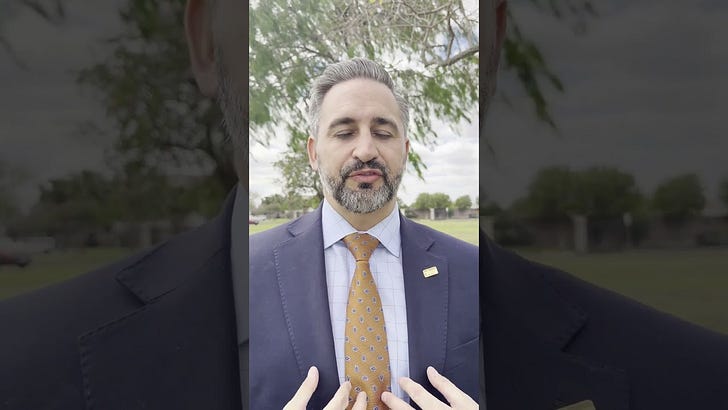

When news first surfaced about a proposed 500-bed immigrant detention center in McAllen, the silence from local leadership was striking. Calls went unanswered. Information was scarce. And for many residents, the question wasn’t just what is happening?—but why didn’t we know?
On March 18, 2026, at an event organized by UnidosUS and UnidosUS State Director Eric Holguín at McAllen Municipal Park, community members gathered to raise awareness and call for the release of children from detention. Groups including LUPE, AFT, and immigration attorneys such as Efrén Olivares of the National Immigration Law Center, who represents the Gámez-Cuéllar family, were invited to speak and give testimony.
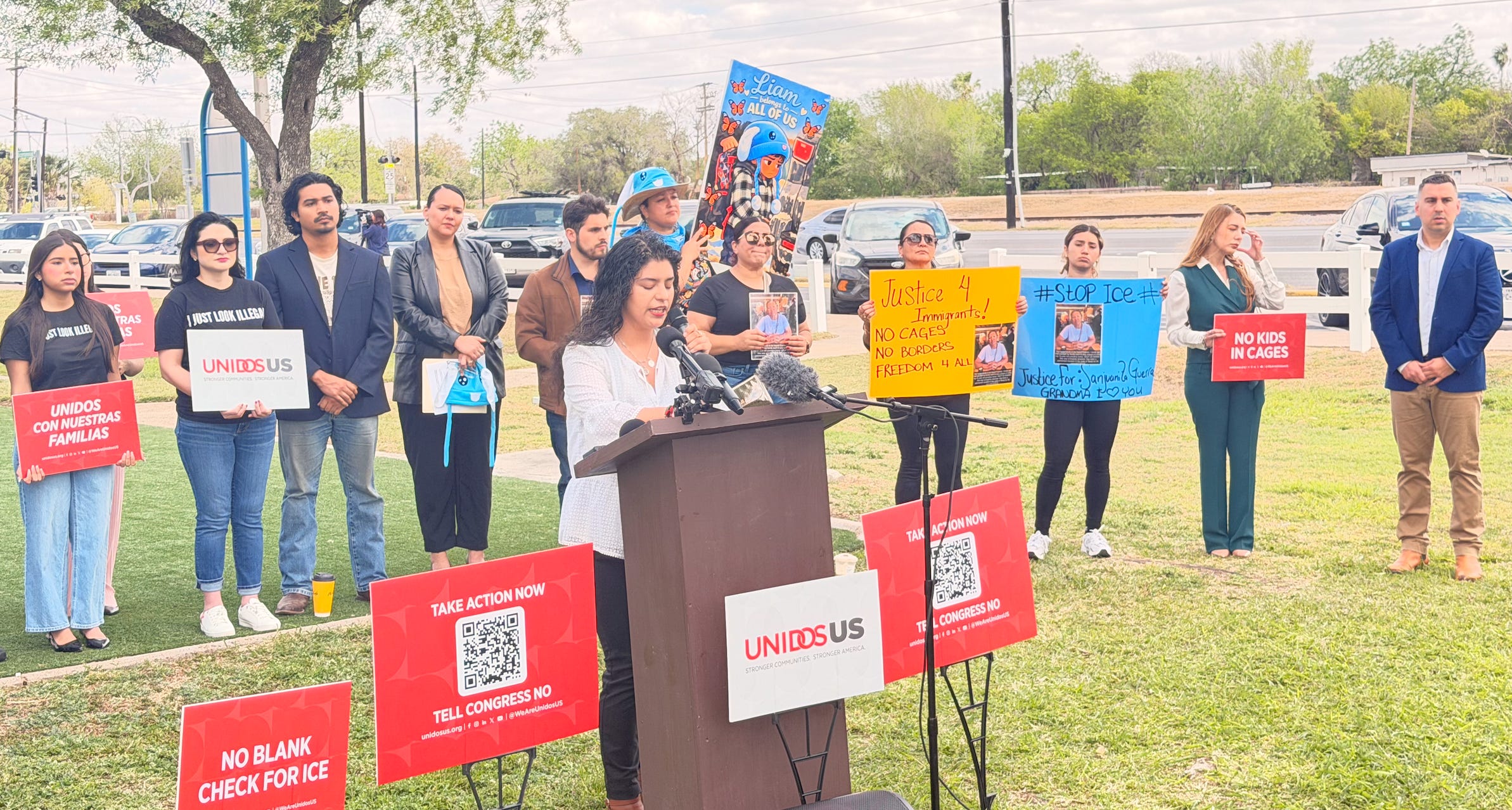
During the event, I had the opportunity to speak with McAllen Mayor Pro Tem Seby Haddad directly and ask him about the detention center. Haddad offered a candid response:
“Us as elected officials… we came to find out about it the same way the community did. I saw an article, I saw some social media posts.”
That admission is important. It tells us this process, at least so far, has not been transparent—not even to those elected to represent the city.
Warehouse Ownership and Transparency
According to reporting from Salt Box Substack, the McAllen warehouse is owned by Centennial Park LLC and is being represented by NAI Rio Grande Valley, who did not respond to requests for comment. The property is still listed for sale on LoopNet. Salt Box notes that previous warehouse sales to DHS were often discovered only after their LoopNet listings were suddenly taken down, highlighting the difficulty of tracking federal acquisitions locally (Salt Box, 2026).
Salt Box is a civic transparency initiative modeled on Baltimore’s “Salt Boxes”—bright yellow boxes placed around neighborhoods for public use. Project Salt Box applies the same principle to federal transparency at a local level, gathering public records to make federal developments understandable and accountable to communities. Their work focuses heavily on the Department of Homeland Security and related federal funding, tracking facility acquisitions, leases, and new infrastructure funded by surge spending.
This underscores why early awareness and reporting are critical for McAllen: the public must track property sales, leases, and federal plans before they become permanent fixtures in the local landscape.
Haddad also explained why the situation feels so uncertain. If the project moves forward under federal authority, the city’s power may be extremely limited:
“The state government and the federal government are 100% immune from any local municipal permitting or ordinances.”
In practical terms:
“They do not have to come to the city to get a certificate of occupancy… we can’t dictate like we do any other facility.”
It’s a sobering reality. The usual tools cities rely on—zoning, permits, inspections—may not apply here. Haddad did not hide his frustration, calling it:
“difficult to hear that basically the federal government is fully immune.”
And on a personal level, he was clear about where he stands:
“I would be wholly opposed to this facility being part of McAllen. I don’t think it fits with our culture… or what we would like within our city.”
Speakers at the event emphasized another important point: there are many children and families in detention whose stories are not widely known—unlike high-profile cases such as 5 year-old Liam Conejo Ramos or the Gámez-Cuéllar family—and we should not wait for name recognition to advocate for their release. Every child and family matters, and early attention can make a difference.
So where does that leave McAllen?
If we stop there, it can sound like there is little to be done. But that’s not the full story.
Just months ago, the city of Hutchins, Texas faced a similar—though much larger—proposal: a 9,000-bed ICE detention center planned for a town of only 8,000 people. Like McAllen, Hutchins had limited legal authority to stop a federally backed project.
And yet, it never happened.
According to WFAA reporting, the turning point came when the property owner, Majestic Realty, refused to sell or lease the warehouse after sustained public pressure from residents and local leaders (WFAA, February 2026). The community spoke out. The issue gained visibility. And ultimately, the project became untenable.
What stopped the detention center in Hutchins wasn’t a legal loophole—it was a decision. A decision shaped by public awareness, community values, and the willingness to speak up early.
That’s the key difference—and the key opportunity for McAllen.
Right now, even Haddad acknowledged there are still unknowns:
“We still have some unanswered questions.”
There is no confirmed purchase. No finalized deal. No clear timeline.
This is not the end of the process. It is the beginning.
And beginnings matter.
Hutchins shows us that even when a city cannot formally block a project, a community can still influence whether it moves forward at all. Property owners can choose not to participate. Leaders can take public positions. Residents can raise questions that demand answers.
None of this requires outrage. It requires attention.
It can look like conversations in churches, neighborhood groups, and community spaces. It can look like asking thoughtful questions about what kind of development reflects McAllen’s values. It can look like staying engaged and informed as more details emerge.
Because of local reporting, this issue reached the community early—creating an opportunity for awareness before decisions are finalized.
Haddad is right about one thing: the system places real limits on what cities can do.
But Hutchins reminds us that limits are not the same as silence.
McAllen is not powerless. Not yet.
The question is whether we choose to remain quiet—or to be heard while it still counts.
Sources:
The Rio Grande Current. “Why Is McAllen So Quiet?” (2026).
Interview with McAllen Mayor Pro Tem Seby Haddad at UnidosUS event, McAllen Municipal Park (March 18, 2026).
WFAA. Coverage of Hutchins, Texas ICE detention center proposal and cancellation (February 2026).
Salt Box Substack. “Tracking Federal Facility Developments” (2026).
Public statements from Majestic Realty declining sale/lease for detention use (2026).